
The impact of aviation emissions on the particle number concentration and particle size distribution
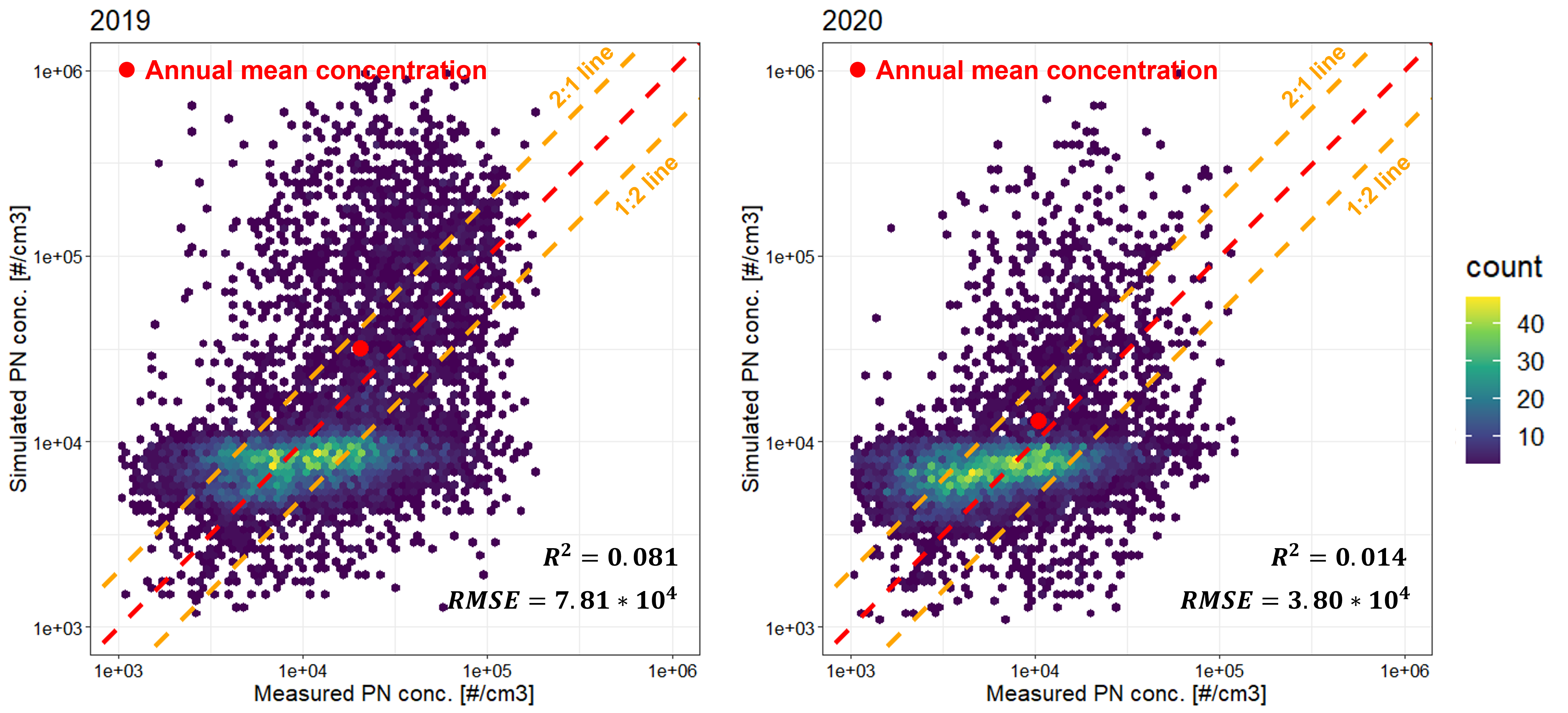
My master’s thesis examines the impact of aviation emissions from Zurich Airport on air quality, specifically focusing on hourly-based particle number (PN) concentration and particle size distribution. The study employed the GRAMM/GRAL atmospheric dispersion model to simulate the transport and dispersion of particles, and the Multicomponent Aerosol Formation (MAFOR) model to account for aerosol dynamics such as coagulation and condensation during transport. A particle number (PN) emission inventory revealed that taxiing phases contributed approximately 70% of total emissions. Simulations demonstrated that aviation emissions could increase hourly PN concentrations by a factor of 2-10 above background levels at a nearby monitoring station, with the majority of emitted particles falling in the 10-30 nm size range. However, limitations in estimating background concentrations and the use of empirical PN emission factors highlighted the need for further refinements in the model to better capture the long-term impacts of aviation emissions on local air quality.
See Master’s Thesis for details.